This post may contain affiliate links. If you click on these links and make a purchase, I may earn a small commission at no extra cost to you. I only recommend products I believe provide value. Thank you.
Choosing a space heater involves more than finding one that produces heat; you also want consistent room warmth, convenient temperature controls, manageable running costs, and reliable safety features. The DREO Convection Panel Space Heater is designed for people looking for a practical way to warm indoor spaces, but how well does it meet everyday heating needs?
In this review, I look at the heater’s design, heating performance, thermostat controls, noise levels, safety features, and potential running costs to help you decide whether it is a good fit for your home. I also consider its limitations, including room size, insulation, and electricity consumption, so you can weigh its benefits against its drawbacks before buying.
Table of Contents
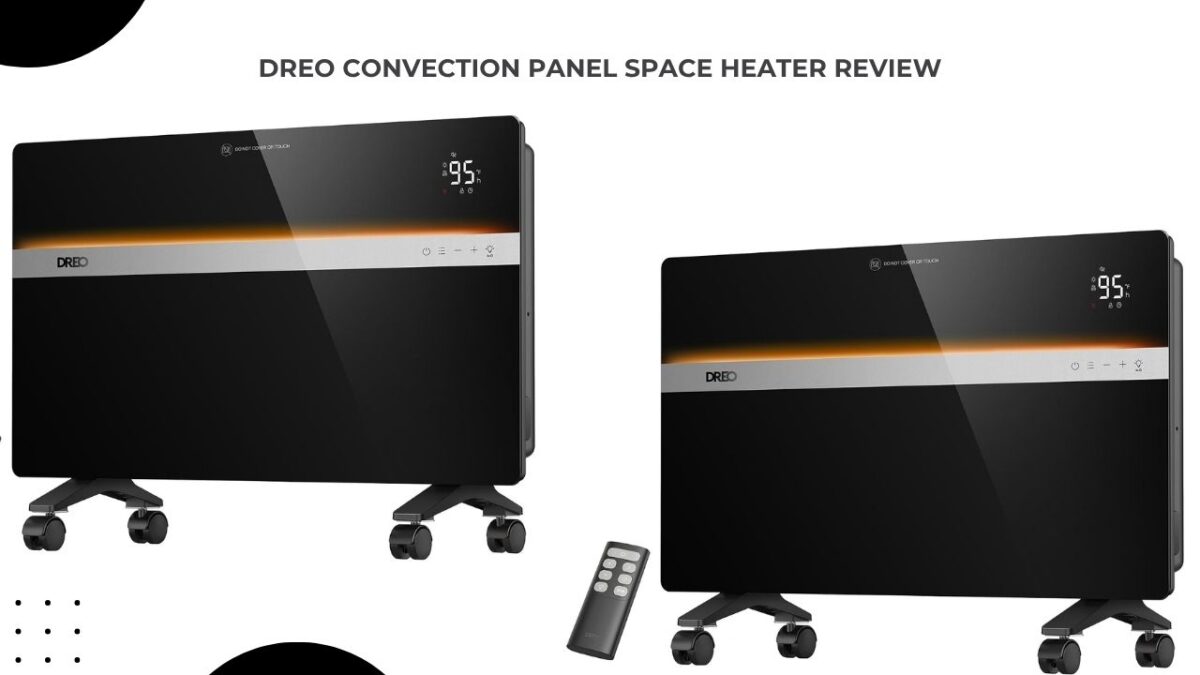
DREO Convection Panel Space Heater Review: Is It Worth It?
When I evaluate a space heater, I look beyond its wattage and advertised heating coverage. I want to know how quickly it makes a room comfortable, whether it creates distracting noise, how easy it is to control, and whether it makes sense to leave it running while working, reading, or sleeping.
The DREO Convection Panel Space Heater 711S takes a different approach from the typical ceramic fan heater. Instead of blowing heated air directly toward you, it uses natural convection to warm the surrounding air. It also combines a slim panel design with a thermostat, smart controls, scheduling, and a choice between freestanding and wall-mounted installation.
That combination makes it particularly interesting for bedrooms, home offices, and other spaces where quiet operation matters.
However, there is an important trade-off. A fanless convection heater prioritizes gradual, relatively even warmth over the immediate sensation of hot air blowing toward you. If you want to warm your feet quickly after coming in from the cold, a fan heater may feel more effective.
My verdict: The DREO Convection Heater 711S is worth considering if you want quiet, thermostat-controlled supplemental heating. Its suitability depends on your room size, insulation, electricity costs, and how quickly you expect to feel warm.
What makes the DREO 711S different?
The first thing to understand about this heater is its heating method.
Many portable ceramic heaters use a fan to push air across a heated element. That gives you a noticeable stream of warm air, which can make the immediate area feel warmer quickly. The downside is the sound of the fan and the movement of air around the room.
The DREO Convection Heater 711S uses natural convection instead. Cooler air enters near the bottom, warms as it passes through the heating system, and rises through the upper part of the unit. Cooler air then moves in to replace it, creating a continuing circulation of air.
The practical difference is that you don’t have a fan blowing directly at you.
I consider this an important distinction when choosing a heater for a bedroom or workspace. If you spend several hours in the same room, the sound of a fan can become more noticeable than it would during a short heating session.
There is a trade-off, though: natural convection generally takes time to warm the room, particularly if the space is large, poorly insulated, or starting from a very low temperature.
- Heating performance: comfortable warmth rather than an instant blast
Heating performance is where I would pay the most attention before buying the DREO 711S.
Its fanless design is intended to warm the room gradually rather than concentrate heat in a narrow stream. That makes it better suited to maintaining a comfortable temperature than providing immediate, directional heat.
For example, if I were choosing a heater for a bedroom, I would value being able to maintain a comfortable temperature without a fan running throughout the night. For a home office, I would also consider whether the heater can operate without introducing background noise during calls.
However, I wouldn’t assume that a convection panel will heat every room equally well.
Room size, ceiling height, drafts, insulation, outside temperature, and the heater’s placement all affect the result. A well-insulated bedroom is a very different heating challenge from a large living room with several windows and constant air leakage.
The 711S is best considered a supplemental room heater, not a guaranteed replacement for a home’s primary heating system.
- What about its 1,500W heating capacity?
The model is described as a 1,500-watt-class electric heater. That is a useful specification, but wattage alone doesn’t tell you how quickly a particular room will reach your preferred temperature.
At 1,500 watts, the heater draws approximately 1.5 kWh of electricity for each hour it operates continuously at full power.
Actual consumption can be lower when the thermostat cycles the heating element off or when an operating mode reduces output. The exact result depends on the selected settings and room conditions.
This is why I would assess the DREO on two separate questions:
- Can it maintain a comfortable temperature in the room where I plan to use it?
- Can it do that at an electricity cost I am comfortable paying?
A heater can perform well at warming a room and still be expensive to run if it operates for many hours every day.
- The biggest advantage: fanless operation
For me, the strongest reason to consider a convection panel heater is the absence of fan noise.
Because the DREO 711S doesn’t rely on a conventional heating fan, it avoids the familiar whirring sound associated with many portable ceramic heaters.
That makes it worth considering for people who are sensitive to background noise.
I would particularly consider it for:
- Bedrooms where mechanical noise is distracting.
- Home offices where you regularly take calls.
- Reading areas where you prefer a quieter environment.
- Rooms where you want steady supplemental warmth rather than a direct stream of hot air.
One distinction is worth making: fanless doesn’t necessarily mean that every aspect of the appliance is completely silent under all circumstances. Controls, electrical components, or thermal expansion can sometimes produce minor sounds. Nevertheless, eliminating the conventional fan removes a common source of operating noise.
If quiet heating is your priority, that is a meaningful advantage.
- Thermostat and ECO mode: useful, but not magic
The thermostat is one of the features I would pay attention to when comparing the 711S with a basic space heater.
Rather than operating only at a fixed setting, a thermostat-controlled heater can regulate its heating cycle around a target temperature. Once the room reaches that target, the heater can reduce or stop active heating and resume when the temperature falls.
This is useful because the goal isn’t necessarily to run a heater at maximum power all day. The goal is to keep the room comfortable.
The DREO Convection Heater 711S also advertises an ECO mode intended to help manage energy consumption.
I would treat the advertised energy savings as dependent on usage conditions rather than a guaranteed percentage for every household. Actual savings depend on the room, insulation, chosen temperature, outdoor conditions, and the alternative heating setting being compared.
For better control over running costs, I would use the thermostat, avoid setting the temperature higher than necessary, and close doors and windows while heating the room.
- Smart controls and scheduling
Smart control can be more useful for a space heater than it initially sounds.
If you use the same room at predictable times, scheduling lets you coordinate heating with your routine rather than leaving the heater running unnecessarily.
For example, you might schedule heating around the time you normally begin working or use the controls to adjust the temperature without walking across the room.
The 711S is described as supporting app and voice control. The availability of particular integrations and functions should be checked against the current product documentation for your region.
What matters most to me is whether the controls make everyday operation easier. Smart features are useful when they help you manage temperature and operating time; they are less valuable if you only need a simple manual on/off switch.
I would also keep the physical controls accessible so the heater remains usable without relying entirely on an app or an internet connection.
- Design and placement
The DREO Convection Heater 711S has a slim panel design with a tempered-glass front. It can be used freestanding or mounted on a wall, subject to the manufacturer’s installation instructions.
I like the flexibility this offers in principle.
A freestanding setup is useful if you want to move the heater between suitable rooms. Wall mounting can help free up floor space in a room where furniture and other appliances already compete for space.
However, placement matters with any convection heater. It needs sufficient clearance for air to circulate, and the manufacturer’s specified distances from walls, curtains, furniture, bedding, and other combustible materials must be followed.
I would not place it wherever it looks best without first checking the installation requirements.
The display also has a night-dimming feature according to the supplied product information. That can be helpful in a bedroom where a bright display would otherwise be distracting.
Can you use the DREO 711S in a bathroom?
The model is described as having an IP24 splash-resistance rating. That is a useful feature, but it should not be interpreted as making the heater waterproof or safe to place anywhere in a bathroom.
Bathroom installation depends on the appliance’s instructions, local electrical regulations, and the location of water sources and electrical fittings.
Before installing or operating it in a bathroom, check the manufacturer’s permitted installation locations and required clearances. If permanent installation is involved, use a qualified electrician where required.
I would never expose the heater to direct water, operate it with wet hands, or assume that an IP rating overrides bathroom electrical-safety requirements.
Safety features and everyday precautions
Space-heater safety deserves more attention than it usually gets in product reviews.
The DREO Convection Heater 711S is marketed with multiple protective features, including overheat protection and an anti-scald plug. The exact protection systems should be confirmed in the manual for the specific model.
These features are reassuring, but they don’t remove the need for safe placement and operation.
I would always:
- Keep the heater away from curtains, bedding, clothing, and other combustible materials.
- Follow the specified clearance requirements.
- Avoid covering the unit or obstructing its air openings.
- Keep it away from direct water exposure.
- Use an appropriate electrical outlet according to the manufacturer’s instructions.
- Avoid using a damaged power cord or plug.
- Follow the manual’s instructions about unattended operation and overnight use.
For homes with children or pets, placement is especially important. A wall-mounted installation may help prevent accidental contact, but only when it is permitted and installed correctly.
Energy consumption: what it could cost to run
Electricity cost is an important consideration, especially if you plan to use the heater every evening.
A simple way to estimate the cost is:
Electricity cost = power consumption in kW × operating hours × electricity tariff per kWh
At a continuous 1.5 kW draw:
| Daily operation | Electricity consumed |
|---|---|
| 1 hour | 1.5 kWh |
| 4 hours | 6 kWh |
| 8 hours | 12 kWh |
These figures assume continuous operation at full rated power. Thermostat cycling or lower-power operation can reduce actual consumption.
To estimate your own cost, multiply the relevant consumption by your electricity tariff. For example, if your effective tariff were KSh 30 per kWh, four hours of continuous full-power operation would cost approximately KSh 180. Your actual tariff may differ, and the heater may not draw full power continuously.
I wouldn’t buy the DREO on the assumption that convection automatically makes it cheaper to run than every fan heater. Electric resistance heaters convert electrical energy into heat at broadly similar efficiencies at the point of use. Differences in real-world costs depend on controls, operating time, and how effectively the heater meets your needs.
What I would watch out for
The DREO Convection Heater 711S has some clear advantages, but there are limitations worth understanding before purchasing.
It may take longer to make a cold room feel warm. If you’re looking for immediate, directional heat, a fan heater may feel more effective.
Room suitability matters. A 1,500W heater may struggle to maintain your preferred temperature in a large, drafty space during very cold weather.
Running costs can add up. Continuous high-power operation consumes substantial electricity, regardless of the heater’s appearance or heating method.
Smart features aren’t essential for everyone. If you only need occasional heat in a small area, a simpler heater might offer better value.
Bathroom suitability needs verification. An IP24 rating does not mean the unit is suitable for every bathroom location or installation.
Long-term durability requires evidence. I would avoid making strong claims about years of reliability without extended ownership data or a sufficiently large body of credible long-term reports.
DREO 711S vs. a ceramic fan heater
| Feature | DREO 711S convection panel | Typical ceramic fan heater |
|---|---|---|
| Noise | No conventional heating fan | Usually produces fan noise |
| Heating sensation | Gradual, natural convection | Direct stream of warm air |
| Best use | Quiet supplemental room heating | Quick, targeted warmth |
| Placement | Freestanding or wall-mounted, as permitted | Often freestanding |
| Energy use | Depends on power, controls, and operating time | Depends on power, controls, and operating time |
| Main drawback | May feel slower to warm a cold room | Noise and moving air |
Neither design is universally better. The right choice depends on whether you prioritize quiet, steady heating or the immediate sensation of warm air.
Pros and cons
Pros
- Fanless design avoids conventional fan noise.
- Natural convection is suited to steady supplemental heating.
- Thermostat and ECO mode provide temperature-management options.
- App and scheduling features can make heating more convenient.
- Slim panel design suits rooms where appearance matters.
- Freestanding and wall-mounted options offer placement flexibility, subject to the manual.
- Advertised splash resistance may be useful for approved bathroom installations.
Cons
- May feel slower than a fan heater when warming a cold room.
- Not automatically suitable as the sole heater for a large or poorly insulated space.
- Continuous high-power operation can increase electricity costs.
- Wall mounting requires careful attention to installation instructions and clearances.
- Smart controls may be unnecessary for buyers who prefer simple manual operation.
- Splash resistance does not make the unit waterproof or universally suitable for bathrooms.
Should you buy the DREO Convection Panel Space Heater?
I would consider the DREO Convection Heater 711S if I wanted a quiet supplemental heater for a bedroom, home office, or another room where I spend several hours at a time.
Its main appeal is the combination of fanless convection heating, thermostat control, scheduling, and a relatively slim design. Those features make it worth considering if you value a quieter environment more than an immediate blast of warm air.
I would be more cautious about using it as the primary heating solution for a large, poorly insulated living room. I would also compare the running cost against my expected hours of use before buying.
For bathroom use, I would verify the installation instructions and local electrical requirements rather than relying on the IP24 rating alone.
Final verdict
The DREO Convection Heater 711S is worth considering for quiet, controlled, room-by-room heating—but its value depends on using it in the right space.
It makes the most sense for someone who wants supplemental warmth without the sound of a conventional heating fan. It makes less sense for someone who prioritizes instant directional heat or needs to warm a large, drafty area quickly.
Before buying, check the exact model specifications, installation requirements, warranty, and expected electricity cost. Those practical details matter more than the number of features listed on the product page.