This post may contain affiliate links. If you click on these links and make a purchase, I may earn a small commission at no extra cost to you. I only recommend products I believe provide value. Thank you.
QD-OLED gaming monitors are quickly becoming the new standard for premium visual performance, and this AOC Q27GAZD 27″ QD‑OLED gaming monitor is one of the latest entries targeting competitive and enthusiast gamers. But with so many high-end monitors on the market, the real question is whether this one actually delivers meaningful improvements in everyday gaming.
In this review, I take a closer look at its real-world performance, including response time, color accuracy, HDR experience, and overall gaming smoothness. I’ll also break down who this monitor is actually best suited for competitive gamers, content creators, or casual users looking for a premium display upgrade.
Table of Contents
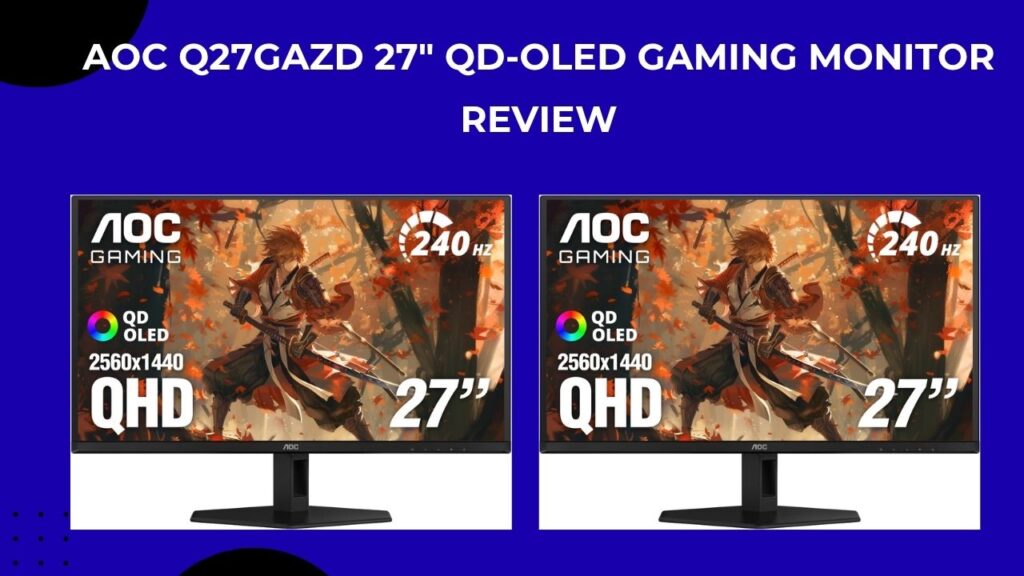
AOC Q27GAZD Review
I’ve been spending some time with the AOC Q27GAZD 27″ QD‑OLED gaming monitor , and honestly, it’s one of those displays that immediately makes you rethink what “good visuals” really mean in gaming.
Coming from a standard IPS screen, the jump to QD-OLED is pretty wild. Everything just looks more alive — colors pop in a way that doesn’t feel exaggerated, blacks are actually black, and dark scenes in games finally look the way they’re supposed to instead of that grey-ish glow you usually get.
On paper, it’s a 1440p panel with a 240Hz refresh rate and an insanely fast 0.03ms response time. In real use though, what that translates to is motion that feels ridiculously smooth. Fast-paced shooters feel tight and responsive, but even slower story games benefit from how clean and fluid everything looks when you move the camera.
What I like most is that it doesn’t feel like it’s only built for competitive players. Yes, it’s fast enough for esports-level gaming, but it also absolutely shines in cinematic single-player games where visuals matter just as much as performance. If you’re someone who switches between both, this monitor fits right in that sweet spot.
It also plays nicely with both NVIDIA G-Sync and AMD FreeSync, so you’re not locked into one ecosystem, and it works well with modern consoles too if you’re gaming at 120Hz.
Of course, it’s not perfect. The 1440p resolution on a 27-inch screen means it’s not the sharpest display out there — if you’re coming from 4K, you’ll notice the difference in pixel density. And there are no built-in speakers, which might matter for some setups, but personally I always use headphones or external audio anyway.
Overall, the AOC Q27GAZD 27″ QD‑OLED gaming monitor feels like one of those monitors that’s built for people who care more about how games look and feel rather than chasing maximum resolution numbers. If you want deep blacks, rich colors, and ridiculously smooth motion without jumping into 4K pricing, this one hits a really nice balance.
Why You Should Choose the AOC Q27GAZD Gaming Monitor
- 1. QD‑OLED Picture Quality You Can’t Ignore
The AOC Q27GAZD uses a QD‑OLED panel, which means each pixel emits its own light and can switch off completely. That translates into perfect blacks, infinite contrast, and no backlight bleed or haloing around bright objects—something LCD‑based monitors simply can’t match. Colors are noticeably punchy, especially reds and greens, and the ~99% DCI‑P3 coverage means movies, games, and even photo editing look rich and cinematic without looking cartoonish. Compared with standard IPS or even other OLED‑type gaming monitors, the Q27GAZD feels more “immersive”; dark scenes in horror games, open‑world RPGs, and streaming content feel like you’re looking through a window rather than at a screen.
- 2. 240 Hz + 0.03 ms – Speed For Competitive Players
The 240 Hz refresh rate and 0.03 ms response time are the reasons this monitor keeps showing up on lists of “best monitors for esports” and competitive FPS. In fast‑moving titles like Call of Duty, Valorant, or CS2, you notice a dramatic reduction in motion blur and smearing, which makes tracking targets and changing directions feel more precise.
For a 27‑inch 1440p screen, that combination is still at the top of the performance ladder; only a few ultra‑premium 240–360 Hz OLEDs surpass it, often at a much higher cost. Casual gamers will enjoy smoother scrolling and UI animations, but serious players will feel the real advantage when it comes to reaction timing and visual clarity at high frame rates.
- 3. Designed For Both PC and Consoles
The Q27GAZD is positioned as a hybrid panel: it’s built for PC gaming but also console‑ready. It supports HDMI 2.0 and DisplayPort 1.4 inputs, and it’s tuned to run up to 120 Hz on PlayStation 5 and Xbox Series X, giving you a single high‑end display for your entire setup. This is a big plus if you don’t want to juggle multiple monitors or hook your console into a normal TV. The adaptive‑sync support (G‑Sync Compatible and FreeSync Premium) also helps eliminate screen tearing and stuttering across both platforms, so you spend less time tweaking settings and more time actually playing.
- 4. Gaming‑First Features That Actually Matter
Beyond raw specs, the AOC Q27GAZD packs a number of gaming‑oriented features that enhance practical usability. These typically include things like:
- Multiple gaming picture modes (FPS, RTS/RPG profiles) that tweak contrast, gamma, and color saturation for different game types.
- A frame‑rate counter and timer, which help you track performance and time‑attack runs without third‑party overlays.
- A built‑in crosshair overlay and sniper‑scope‑style aim assist, which can be handy for training or when you don’t want to rely on in‑game UI.
These features are the kind of quality‑of‑life touches that make the monitor feel like a “premium gaming” product, not just a generic OLED panel in a different case.
Standout Features in Detail
- 1. QD‑OLED Panel With Diamond‑Type Subpixel Layout
Under the hood, the AOC Q27GAZDuses a QD‑OLED panel with a diamond‑shaped subpixel layout, which is known for improving text clarity and reducing the “fringing” that older OLED and some W‑OLED panels suffered from. On a 27‑inch 1440p screen, this means UI text, menus, and HUD elements look crisp and readable, even if the pixel density isn’t as high as on 4K displays. In practice, you’ll see less color aliasing and more balanced brightness on small fonts, which is a relief if you were worried OLEDs would look “haloed” or fuzzy in pure desktop work.
- 2. 2560×1440 QHD At 240 Hz
The choice of 1440p at 240 Hz is one of the smarter compromises you’ll see in modern gaming monitors. It’s high enough that games and desktop content look sharp and detailed, but not so demanding that you need a top‑tier 5090‑class GPU to hit high frame rates. For many users, this is the “sweet spot” where you get the best visual quality without killing your GPU’s performance headroom.
- 3. Adaptive Sync For Tear‑Free Gameplay
Adaptive sync is handled by both NVIDIA G‑Sync Compatible and AMD FreeSync Premium, which means the monitor can sync with a wide range of GPUs and refresh rates. This is especially important at lower frame rates, where traditional V‑Sync can introduce stutter or lag, and disabling it can cause screen tearing. On the AOC Q27GAZD, the result is smooth, tear‑free motion from around 48–240 Hz, depending on your GPU and settings.
- 4. 3‑Year Zero Bright‑Dot Warranty
AOC typically backs this class of QD‑OLED monitor with a 3‑year zero‑bright‑dot warranty, which is a big confidence booster given the ongoing concerns about OLED burn‑in and dead‑pixel issues. That warranty makes it easier to treat this as a long‑term investment rather than a risky experiment, especially if you plan to run static HUDs, taskbars, or desktop icons in the same spot for long periods.
- 5. Clean, Minimalist Design
The physical design of the AOC Q27GAZD leans toward minimalist: slim bezels, especially on three sides, and a compact stand that doesn’t dominate the desk. It’s also VESA‑ready, so you can move it to an arm or dual‑monitor setup if you want more flexibility. The lack of built‑in speakers keeps the profile slim and the price competitive, but it also means you’ll want to pair it with a good headset or external audio.
What Customers Are Saying (In Practice)
Users who’ve spent time with this kind of 27‑inch QD‑OLED 1440p 240 Hz monitor consistently highlight a few recurring themes:
- “I didn’t realize how much a QD‑OLED changes the experience.” Many comment that the jump from a good IPS or VA panel to QD‑OLED is far more noticeable than the jump from 60 Hz to 144/240 Hz alone. The contrast and richness of colors in games and movies are described as “cinema‑like,” and dark scenes feel genuinely immersive rather than just “well‑darkened.”
- “Motion is incredibly smooth and clear.” Competitive players report that fast‑pacing shooters feel “snappier” and more responsive, with less perceived blur when flicking or tracking targets. The 0.03 ms response time combined with adaptive sync produces very clean motion, even at high frame rates.
- “Perfect for a mixed gaming setup.” Because the monitor supports both PC and console‑style refresh rates and adaptive sync, owners often praise the flexibility. They can use one high‑end display for everything from Fortnite and Apex to single‑player story‑driven titles and streaming, without needing to switch inputs or screens.
- “Sharp enough, but not 4K.” In customer‑style feedback, some note that smaller text on the desktop can look a bit “fuzzy” compared with a 4K 27‑inch, but that for gaming and most media it’s still plenty sharp. This is expected at ~109 PPI, and it’s rarely a dealbreaker for gamers who prioritize performance over extreme pixel density.
- “No speakers, but that’s fine.” A few users mention that the lack of built‑in speakers is an inconvenience if you don’t already have a headset or external audio setup, but most agree it’s a fair trade‑off for the slim design and lower price.
Where AOC Q27GAZD Shines The Most
For Competitive FPS and Esports
If you’re into Valorant, CS2, Apex Legends, Call of Duty, or similar fast‑paced shooters, the Q27GAZD’s 240 Hz refresh rate and 0.03 ms response time are ideal. The combination of low motion blur and adaptive sync makes it easier to track moving targets and react quickly, while the high contrast helps you distinguish enemies in dark or shadowy areas. The FPS‑oriented picture modes and gaming overlays (like crosshair and frame‑rate counter) further tailor the experience for competitive play.
For Cinematic Single‑Player Games
Story‑driven titles, RPGs, and open‑world games benefit massively from QD‑OLED’s contrast and color saturation. The true blacks make night scenes, caves, and indoor environments feel more atmospheric, while the wide color gamut ensures explosions, magic effects, and environments look vivid and lifelike. At 240 Hz, even slower‑paced games feel smoother and more fluid, especially when you’re exploring large maps or panning the camera.
For Mixed PC and Console Use
If you want one monitor that can handle high‑frame‑rate PC gaming as well as 120 Hz console play, the AOC Q27GAZD is a strong central hub. You can plug your gaming PC into DisplayPort for maximum performance and connect your console via HDMI, then switch between them without sacrificing quality or features. The adaptive‑sync support and console‑ready refresh‑rate range make it a plug‑and‑play solution for families or hybrid setups.
Who Should Buy It (And Who Should Skip It)
Buy it if:
- You want a true QD‑OLED experience at 27‑inch size without paying 4K‑level prices.
- You play competitive FPS or esports titles and value 240 Hz and 0.03 ms response time.
- You want rich, cinematic colors and deep blacks for movies, series, and narrative games.
- You use both PC and console and want one high‑end display that works for both.
- You like a clean, minimal design and don’t mind using external speakers or a headset.
Reconsider it if:
- You primarily do desktop work, photo editing, or coding and care more about pixel density than motion clarity (a 4K 27‑inch or 32‑inch panel may suit you better).
- You absolutely need built‑in speakers and don’t want to add a separate audio solution.
- You’re on a very tight budget and still satisfied with a good 144 Hz IPS panel, since QD‑OLED remains a premium investment.
Verdict: Should You Buy It?
If you’re ready to move beyond standard IPS or VA gaming monitors and experience the leap to QD‑OLED without going full 4K, the AOC Q27GAZD 27″ QD‑OLED Gaming Monitor is one of the best choices available. It delivers exceptional contrast, incredibly smooth motion at 240 Hz, and a feature set tailored to both competitive PC gaming and console‑ready entertainment—all in a sleek 27‑inch chassis that fits neatly on most desks.
The main trade‑offs are lower pixel density compared with 4K and no built‑in audio, but for the target audience of serious gamers and media lovers, these are small compromises to pay for the kind of image quality and responsiveness this monitor offers. Put simply: if your priorities are vivid colors, deep blacks, and ultra‑smooth motion, the AOC Q27GAZD is very much a monitor you should buy.