This post may contain affiliate links. If you click on these links and make a purchase, I may earn a small commission at no extra cost to you. I only recommend products I believe provide value. Thank you.
The Shark SilkiPro Straight and Dyson Airstrait are two of the most talked-about wet-to-dry straighteners right now, but they are not identical once you start using them daily. I compared both tools to see how they handle thick hair, frizz, drying time, and styling comfort. If you’re wondering whether the Dyson is still worth the premium price or if the Shark offers better value, this comparison will help you decide.
Table of Contents
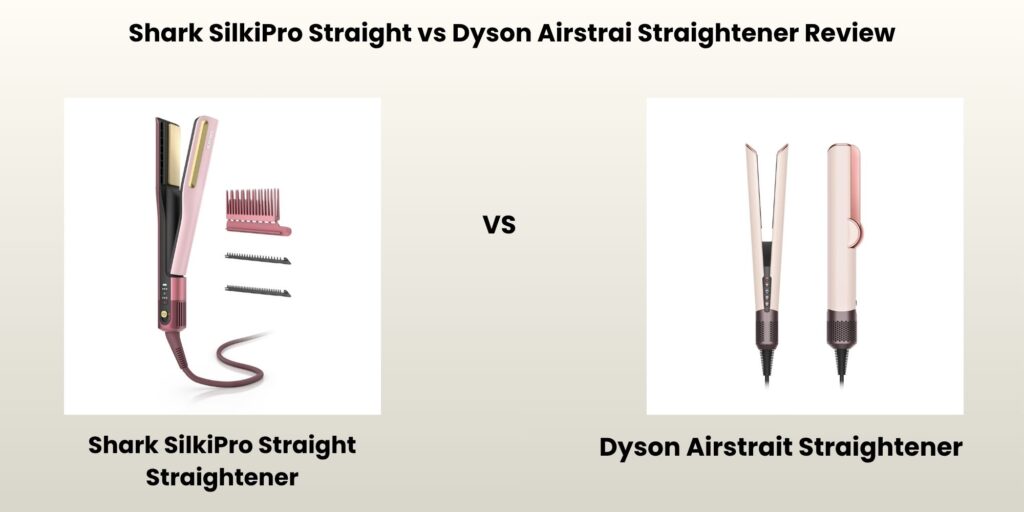
Shark SilkiPro Straight vs Dyson Airstrait Straightener Review
If you’ve been looking for a way to skip the whole “blow-dry first, straighten later” routine, both the Shark SilkiPro Straight and Dyson Airstrait promise exactly that. They’re designed to dry and straighten damp hair at the same time using airflow instead of the traditional scorching-flat-iron approach.
After comparing features, watching real-world tests, and digging through customer feedback, I honestly think these two tools are closer in performance than the price tags suggest.
The Shark SilkiPro Straight is Shark’s first wet-to-dry air straightener, and it surprised me more than I expected. It combines heated airflow with ceramic plates, which helps it smooth thick or frizzy hair faster than most air stylers I’ve tested. It also comes with interchangeable comb attachments, which actually make a difference if you struggle with roots or textured hair. The wide-tooth comb works well on curls, while the fine comb gives a sleeker finish.
One thing I liked about the Shark is that it feels designed for real everyday use rather than just flashy marketing. The controls are simple, it heats quickly, and the higher temperature range gives it enough power for stubborn hair types. The downside is that the ceramic plates may feel a little aggressive for people with very fine or heavily damaged hair.
The Dyson Airstrait takes a different approach. Instead of plates, it relies entirely on controlled airflow to straighten the hair. That makes it feel gentler overall, especially if your hair breaks easily or reacts badly to heat styling. It also leaves hair looking soft and natural instead of super flat.
That said, I can understand why some buyers hesitate at the price. At around twice the cost of the Shark, the Dyson feels more premium, but not necessarily twice as effective. I also found the controls and display slightly less intuitive than they needed to be.
Shark SilkiPro Straight vs Dyson Airstrait Performance
From my experience, the Shark SilkiPro Straightoften finished styling faster, especially on thick, curly, or frizz-prone hair. The comb attachments help guide the hair better, so fewer passes are needed. Dyson Airstrait still performs really well, but it seems to shine most on fine, color-treated, or damaged hair where minimizing heat exposure matters more than speed.
In terms of results, both leave hair smooth and noticeably less frizzy. The Shark tends to create a sleeker, shinier finish, while the Dyson gives a softer, more natural look.
A few smaller things stood out too:
- The Shark feels lighter in the hand during longer styling sessions.
- The Dyson is slightly louder while running.
- The Shark offers more styling flexibility if you like flips, bends, or soft curls.
- Dyson still has the edge for long-term heat protection.
Which Wet-to-Dry Styler Is Better?
For most people, I’d probably recommend the Shark SilkiPro Straight.
It delivers very similar results to the Dyson for a much lower price, and it works especially well on thick, curly, or hard-to-manage hair. If your goal is fast styling, smoother hair, and less frizz without spending a fortune, the Shark feels like the better value overall.
The Dyson Airstrait still makes sense for certain users though. If your hair is fragile, bleach-damaged, or extremely fine, the plate-free airflow system may be worth paying extra for. It’s also a good fit if you already love Dyson styling tools and want something that feels premium and ultra-gentle.
Shark SilkiPro Straight vs Dyson Airstrait Straightener Specs Comparison
| Feature | Shark SilkiPro Straight | Dyson Airstrait |
|---|---|---|
| Heat Source | Ceramic plates + airflow | Airflow only (no plates) |
| Temp Range (Wet/Dry) | 212-248°F wet; 320-428°F dry | Up to 248°F wet; 284°F dry |
| Airspeeds | 3 settings | 2 settings |
| Attachments | 3 combs for detangling/styling | None |
| Versatility | Straighten, curl, flip ends | Straighten only |
| Weight/Design | Lightweight, plum satin finish | Heavier, bulky |
| Damage Prevention | HeatSense sensors | Airflow alignment |
Sharkwins on affordability and extras like combs, which users love for root detangling on curly hair. Dysonprioritizes gentler air tech but lacks flexibility.
Shark SilkiPro Straight Pros and Cons
- Pros
One thing I noticed right away with the Shark SilkiPro is how much faster it handled thick, slightly damp hair compared to most wet-to-dry stylers I’ve tested. The comb-style design helps guide the hair smoothly, which made my blowout look more polished without needing several passes. I also liked that it added noticeable shine while keeping frizz under control, especially in humid weather. Another big advantage is the price — it delivers a premium feel without costing as much as the Dyson Airstrait, making it a more realistic option for most people shopping for a wet-to-dry hair straightener.
- Cons
That said, it’s not perfect. The heated plates can feel a little aggressive if you already have fragile or color-treated hair, especially when using higher heat settings regularly. I also found the clamp slightly firmer than expected, which may bother people who prefer a softer glide when styling. It works well, but it doesn’t always have that ultra-light, effortless feel you get from more premium stylers.
Dyson Airstrait Pros and Cons
- Pros
The Dyson Airstrait stands out for how gentle it feels on the hair. Instead of relying heavily on hot plates, it uses directed airflow to straighten and dry at the same time, which helped my hair feel softer and less dry after styling. The results looked smooth, sleek, and naturally shiny without that “over-ironed” finish some straighteners leave behind. I also appreciated how simple the controls are — the styling modes are easy to switch between, making it beginner-friendly even if you don’t style your hair often.
- Cons
The biggest drawback is easily the price. The Dyson Airstrait is one of the most expensive wet-to-dry hair straighteners on the market, so it’s hard to justify unless hair health is your top priority. It’s also a bit heavier and louder than I expected during longer styling sessions. And unlike some Shark styling tools, you don’t really get extra attachments or versatility here — it’s mainly focused on straightening, which may feel limiting for people who like experimenting with different hairstyles.
Who Should Buy Which?
The Shark SilkiPro Straight vs Dyson Airstrait debate is honestly much closer than I expected. Dyson still leads in hair protection and overall refinement, but Shark closes the gap in a big way when it comes to performance, versatility, and value.
For most people shopping for the best wet-to-dry straightener for frizz-free hair, the Shark SilkiPro Straight is probably the smarter buy in 2026. It’s faster, more affordable, and handles thick or frizzy hair extremely well — even if it isn’t quite as gentle as the Dyson over time.